 The Food Safety App
Keep the food safety record through the takeaway rush
Orders arrive from the counter, the phone and delivery apps. Food may be prepared ahead, held for collection or made to order. Your records need to follow the way each item is handled, not just the end-of-night clean.


Free to use. No ads, no paywalls.
Record the check at the stage that matters
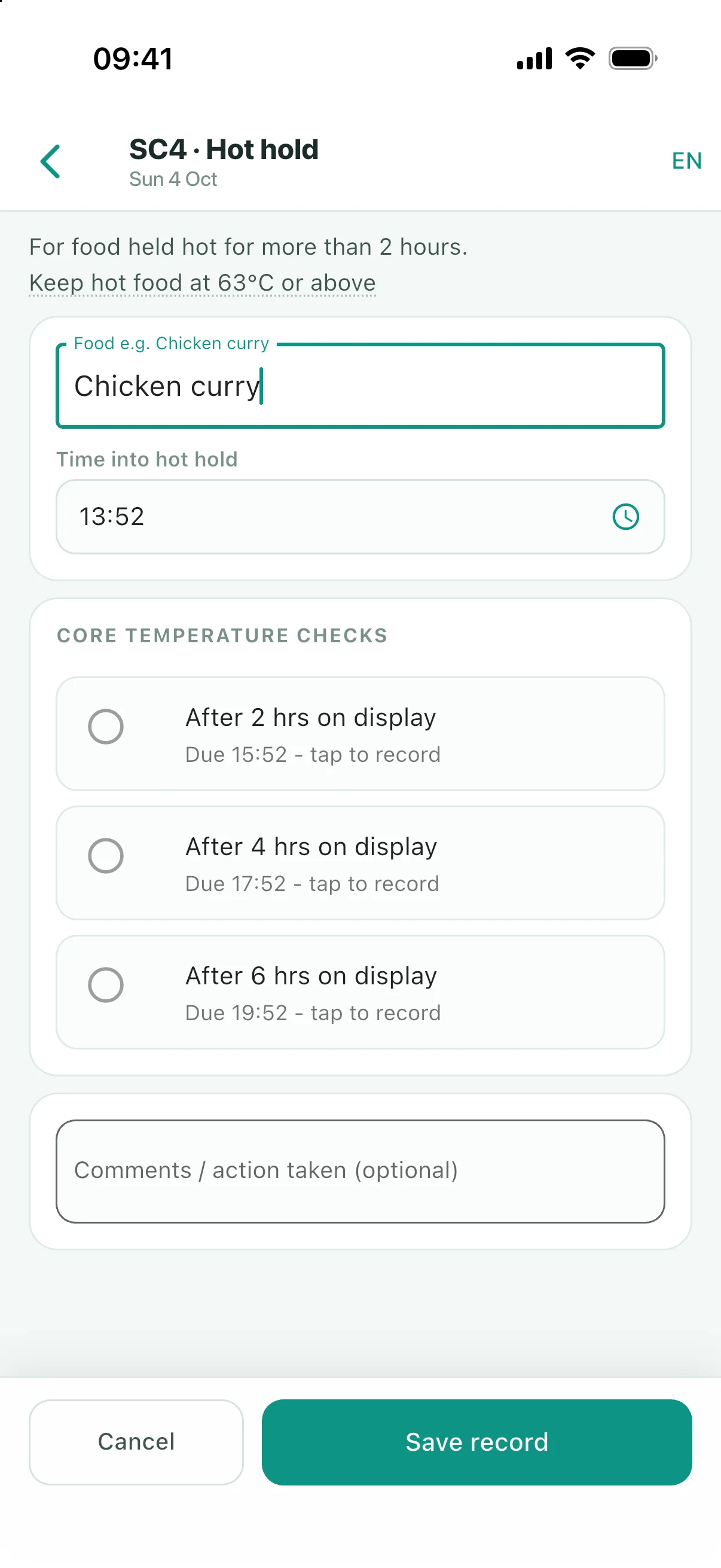
For cooked food held ready to serve, keep the holding checks and any corrective action with that batch. If you cook, cool and reheat food, keep those stages separate from holding. For a cold sandwich counter, choose the chilled-storage and display checks relevant to your procedure instead.
Use SC4 hot-holding records, SC3 cooking records and SC2 chilled-storage records for the processes you actually use. These are records of your checks, not automatic temperature monitoring.
The food leaves, but your controls still matter
Include packing, waiting for collection and transport in your food safety procedures. Decide how hot and chilled food will be protected on the journey and what to do when a collection is delayed. The app does not track couriers or measure temperatures in their vehicles.
For distance orders, allergen information needs to reach the customer before purchase and at delivery. The FSA’s delivery guidance for England, Wales and Northern Ireland covers this and the hygiene controls for transport. Keep ingredient information in the allergen chart and follow the customer-information guide; the chart alone does not complete that communication.
An incoming delivery is a different record
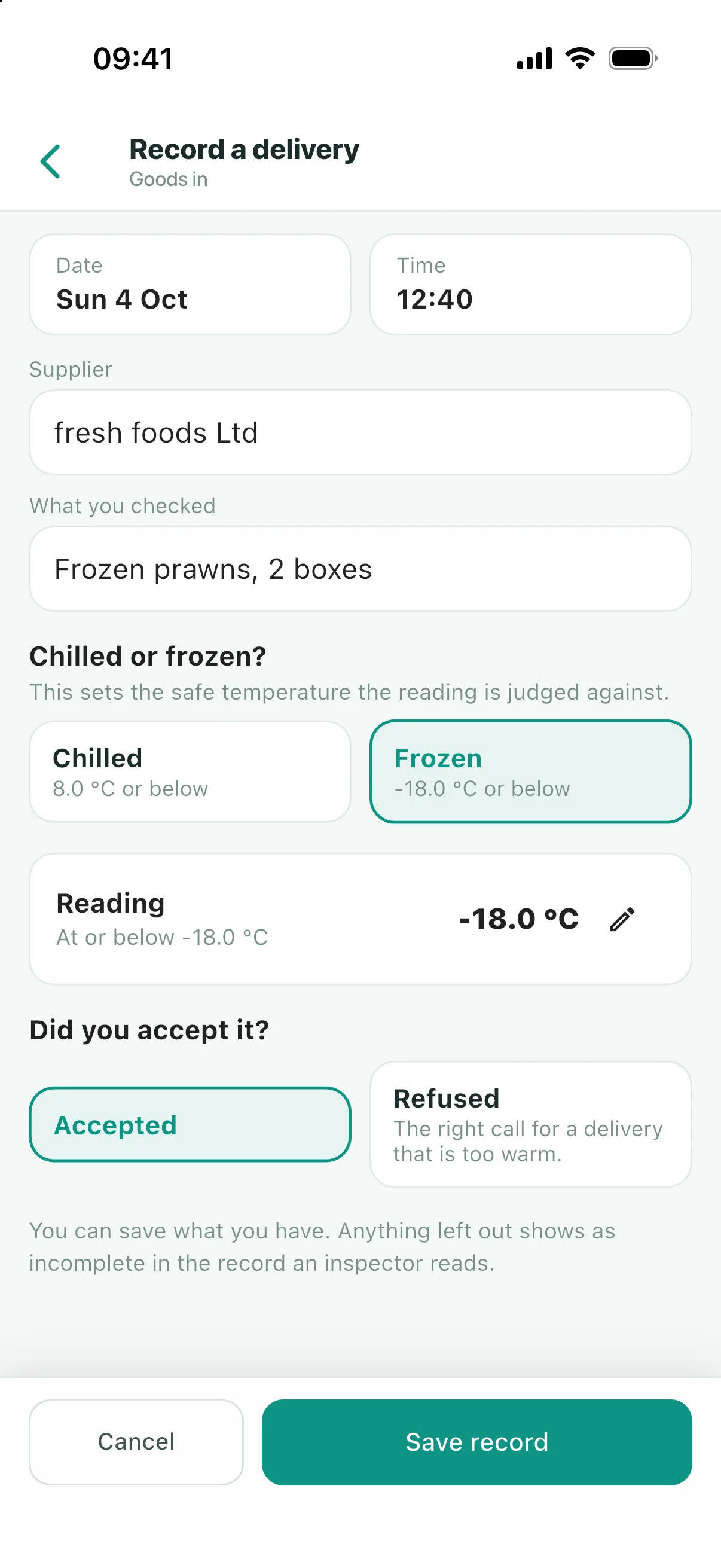
When a supplier brings ingredients, record the checks and any rejected goods before those ingredients enter preparation. Keep supplier details and traceability documents alongside your system. A substitution needs checking against your ingredient and allergen information before staff use it.
The delivery record is for incoming supplier deliveries, not a customer-delivery tracker. Use the daily diary for service problems and actions, and the cleaning schedule for the equipment and surfaces your team needs to clean.
The register category below includes sandwich shops as well as hot-food takeaways. It does not separate delivery-only kitchens or cuisines. Opening a new premises is a different task: use the takeaway opening guide for preparation before the first service.
What the published inspection scores show
Register category: Takeaway/sandwich shop. Snapshot queried on , after warehouse imports through . These are latest published scores, not inspections all made on that date.
Of 52,162 premises with a published FHRS rating from 0 to 5, 61.4% are rated 5. Scotland uses FHIS and is excluded, as are awaiting-inspection and exempt records.
50,883 of 52,162 rated premises have all three valid component scores. The table uses only that complete-score group. It counts scores of 10 or more demerit points in each area; lower is better. A premises can appear in more than one row, so the percentages do not add up to 100%.
| Inspection area | Premises scoring 10 or more | Share of complete-score group |
|---|---|---|
| Food handling and hygiene | 10,425 | 20.5% |
| Premises and facilities | 13,064 | 25.7% |
| Confidence in management | 13,544 | 26.6% |
Highest share at this threshold: Confidence in management. This is a comparison at 10 or more points, not a ranking of specific faults or a prediction for your business.
The register does not identify individual faults, such as a missed fridge check or an allergen mistake. These scores cannot tell us which record was missing, and using the app does not guarantee a better rating. How the three inspection scores work.
Source: our aggregation of FSA open register data. Download the dated counts used on these pages.
Fit the records to your kitchen
These are practical recordkeeping suggestions, not a rule that every business must complete every form. Choose checks and records for your actual food safety procedures. A ticked box cannot replace a safe process, a repair or staff supervision.
The FSA’s SFBB caterers pack covers restaurants, cafés, takeaways and other small caterers, and the FSA publishes separate SFBB packs for Indian and Chinese cuisine. Its management guidance points to SFBB for England and Wales and separate guidance for Northern Ireland. Food Standards Scotland provides CookSafe. The app supplies each of these packs, chosen from what you tell it about your business. See pages from a sample of each pack. Agree the appropriate system with your local authority; these pages do not claim the app replaces every national pack.
Guidance sources checked on . The register snapshot has its own dates above. Follow the linked guidance and your local authority’s advice for your operation.
Keep reading
Keep the records with the people doing the checks
Use the relevant record pages above to choose what belongs in your pack. The app is free on iOS and Android.